
Key Bed Bug Facts
Bed Bug Life Cycle
Bed bugs are small, flat, reddish brown parasitic insects (approx. 5mm) that feed exclusively on blood, typically at night, causing itch bites and potential allergic reactions.
They hide in mattresses, furniture, and clutter, often spreading through luggage or used items. Effective control involves professional extermination, high-heat cleaning, and protective mattress encasements.
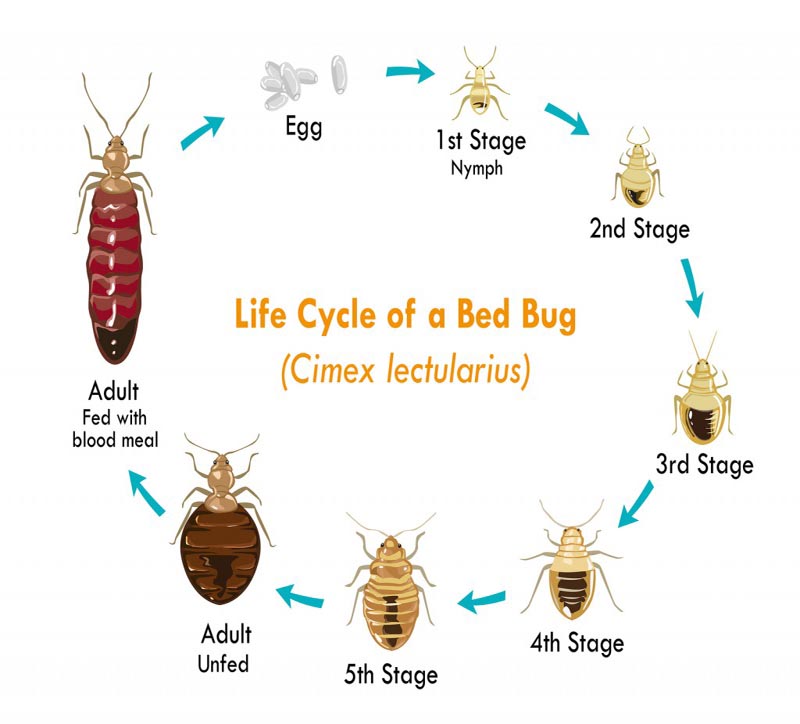
Bed bugs multiply rapidly, with a single female laying 1–7 eggs daily and up to 500 in her lifetime. Eggs hatch in 6–10 days, and nymphs reach reproductive maturity in about 4–6 weeks, allowing the population to double every 16 days under favorable conditions.
A minor infestation can grow to thousands in 3–4 months. Adult bed bugs typically live for 6 to 12 months, though some can survive over a year with regular feeding and moderate temperatures.
They are highly resilient and can survive for 3 to 5 months without feeding in warm conditions, or up to 400+ days in cooler, dormant states.
Appearance & Behavior:
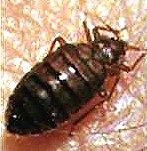
Adult bed bugs are oval-shaped and flat, roughly the size of an apple seed. They cannot fly but are fast runners and, while favoring humans, can feed on pets.
Types:
The primary types are the common bed bug (Cimex lectularius) and the tropical bed bug (Cimex hemipterus).
Lifespan & Breeding:
They can live up to 10 months to a year. Females can lay 1–10 eggs per day and 200–500 in their lifetime.
Feeding:
They can survive for months without feeding, with some reports citing up to 70 days or more.
Habitats:
Common in homes, hotels, apartments, and transportation; they are not attracted to dirt, but to blood meals.
Signs of Infestation
Bed Bug Bites

Bites:
Small, itchy, red bites, often appearing in lines on exposed skin (face, neck, arms, hands).
Stains/Odor:
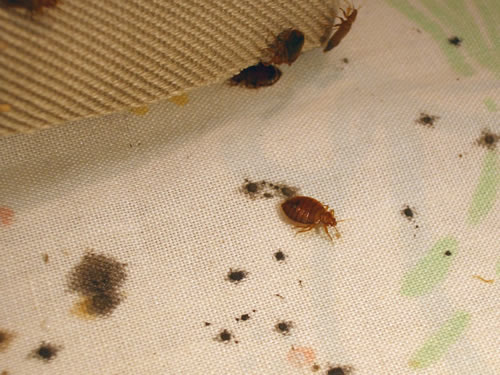
Rusty-colored blood spots on mattresses or sheets.
Physical Signs:
Live bed bugs, shed skins (exoskeletons), and tiny white eggs.
Management and Treatment
Heat Treatment:
Wash bedding/clothing at high temperatures and dry for at least 30 minutes.
Physical Controls:
Use a strong vacuum for cracks and crevices. Use zippered, bed-bug-rated encasements for mattresses and box springs.
Professional Help:
Contact a professional pest control service as they are difficult to eliminate alone.
Freezing:
Items can be placed in a freezer at for at least 4 days to kill them.
Common Misconceptions:
They are not only found in dirty places; they can live anywhere (including 5-star hotels).
You do not necessarily have to throw away all furniture; many items can be treated.
Bed bugs do not transmit disease, despite being parasites.